Strategic management in the nonprofit sector requires a delicate balance between mission-driven vision and operational excellence. As organizations face increasingly complex challenges, the integration of proven performance management frameworks becomes essential for sustainable impact. Two methodologies have emerged as particularly powerful tools for nonprofit strategic planning and execution: the Balanced Scorecard (BSC) and Objectives and Key Results (OKR). While each framework offers distinct advantages, their combined application creates a comprehensive strategic management system that addresses both long-term strategic direction and short-term operational agility.
Understanding the Foundations: BSC and OKR Methodologies
The Balanced Scorecard Framework
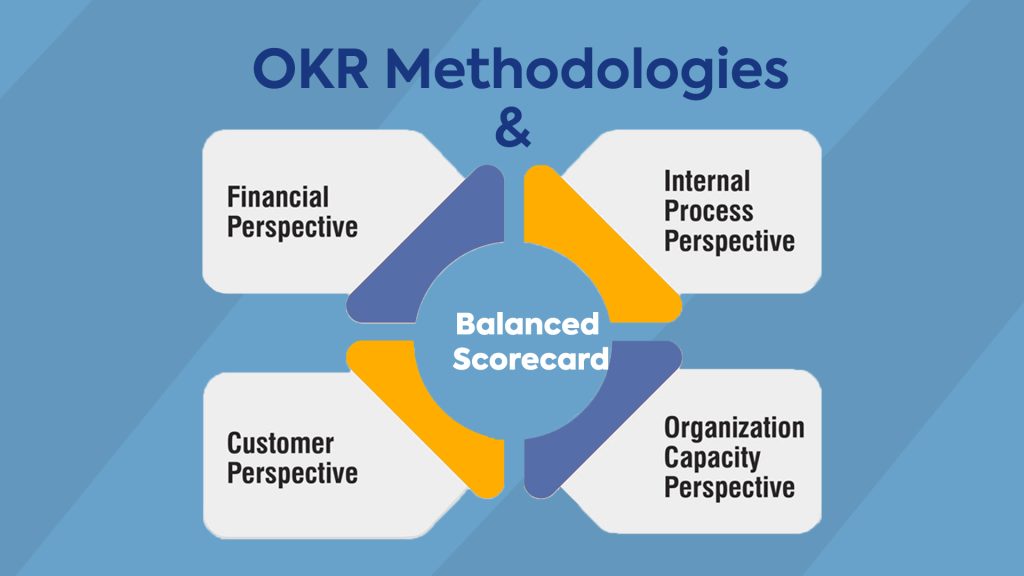
The four perspectives of a traditional balanced scorecard are Financial, Customer, Internal Process, and Learning and Growth, though nonprofit organizations often adapt these perspectives, renaming "Finance" perspective into "Success" or "Stakeholder interests," or putting it on the same level with Customer perspective.
Financial/Stewardship Perspective: For nonprofits, this perspective focuses on financial sustainability, funding diversification, and resource stewardship. This perspective focuses on the financial objectives of the organization. For nonprofits, it includes metrics like funding, donations, budget utilization, and financial sustainability. Key considerations include donor retention rates, cost per program participant, and administrative efficiency ratios.
Mission/Stakeholder Perspective: This replaces the traditional "customer" perspective and encompasses all stakeholders—beneficiaries, donors, community partners, and volunteers. It measures mission fulfillment, stakeholder satisfaction, and community impact. Metrics might include beneficiary outcomes, donor satisfaction scores, and community engagement levels.
Internal Process Perspective: This examines the operational efficiency and effectiveness of program delivery, administrative processes, and organizational systems. For nonprofits, this includes program quality metrics, volunteer engagement processes, and operational efficiency measures.
Learning and Growth/Organizational Capacity Perspective: In the Nine Steps to Success™, the original Balanced Scorecard "learning and growth" perspective has been changed to "organizational capacity". This perspective focuses on staff development, organizational culture, technology infrastructure, and innovation capacity.
The OKR Framework
Objectives and Key Results (OKRs) and Balanced Scorecards (BSC) are performance management frameworks for defining and tracking goals. OKRs provide a goal-setting framework that emphasizes ambitious objectives supported by measurable key results, typically on quarterly cycles.
Objectives: These are qualitative, inspirational statements that define what the organization wants to achieve. For nonprofits, objectives might include "Expand educational opportunities for underserved youth" or "Strengthen community partnerships for sustainable impact."
Key Results: These are quantitative, measurable outcomes that indicate progress toward objectives. They should be specific, time-bound, and challenging yet achievable. Examples include "Increase program participants by 30%" or "Establish partnerships with 15 new community organizations."
The Strategic Advantage of Integration
The true power lies in combining the two approaches. Using OKRs and the balanced scorecard framework combined allows you to align short-term and long-term objectives, foster company alignment, get a comprehensive performance overview, and strike a balance between adaptability and stability.
Understanding BSC Components: Objectives and Strategic Initiatives
Within the Balanced Scorecard framework, strategic objectives represent the high-level goals that organizations seek to achieve across the four perspectives. However, objectives alone don't drive results—they require strategic initiatives to bring them to life.
Strategic Initiatives Defined: Strategic initiatives are the specific projects, programs, or activities that organizations implement to achieve their strategic objectives. Unlike day-to-day operational activities, strategic initiatives are typically time-bound, resource-intensive efforts that create significant organizational change or capability enhancement. For nonprofits, initiatives might include developing new service delivery models, implementing technology systems, creating community partnerships, or building staff competencies.
Initiative-Objective Relationship: Each strategic initiative should directly support one or more BSC objectives, creating a clear line of sight from concrete actions to strategic outcomes. For example, a nonprofit with the objective "Expand educational opportunities for underserved youth" might implement initiatives such as "Develop online tutoring platform," "Establish partnership with local schools," or "Create scholarship fund for program participants."
Initiative Management Complexity: Strategic initiatives require careful management of resources, timelines, dependencies, and stakeholder engagement. Unlike operational activities that follow established processes, initiatives often involve change management, cross-functional coordination, and outcome uncertainty that demands sophisticated tracking and adjustment capabilities.
Complementary Strengths
The Balanced Scorecard excels at providing a comprehensive strategic perspective and ensuring balanced organizational focus across multiple dimensions. It creates a holistic view of organizational performance that prevents tunnel vision and maintains stakeholder accountability. However, BSC can sometimes be static and less responsive to rapid changes.
OKRs excel at creating focus, driving ambitious goal-setting, and enabling rapid adaptation to changing circumstances. They promote transparency and alignment while encouraging stretch goals that drive innovation. However, OKRs can sometimes lack the comprehensive perspective needed for complex organizational management.
When integrated, these methodologies create a powerful framework where OKRs often detail short term improvement goals related to KPI performance. For example, an organization might track a product quality measure on a dashboard for years and years. A short-term OKR might be to improve that quality measure by 10% by the end of a particular quarter.
Designing the Integrated Framework
Phase 1: Strategic Foundation with Balanced Scorecard
Step 1: Mission and Vision Alignment Begin by ensuring that your organization's mission and vision are clearly articulated and widely understood. The Balanced Scorecard provides the framework for translating this mission into strategic objectives across four perspectives.
Step 2: Develop Strategic Objectives Create 3-5 strategic objectives for each BSC perspective, ensuring they directly support the organization's mission. For example:
- Financial/Stewardship: "Achieve sustainable funding diversification"
- Mission/Stakeholder: "Maximize impact on target beneficiary populations"
- Internal Process: "Optimize program delivery efficiency"
- Organizational Capacity: "Build organizational resilience and adaptability"
Step 3: Establish Strategic Measures For each strategic objective, identify 2-3 key performance indicators (KPIs) that will track long-term progress. These measures should be meaningful, measurable, and aligned with stakeholder expectations.
Step 4: Define Strategic Initiatives Develop specific initiatives that will drive progress toward each strategic objective. Initiatives are the concrete projects, programs, or activities that organizations undertake to achieve their strategic objectives. For nonprofits, initiatives might include launching new program components, implementing technology upgrades, developing staff capabilities, or creating community partnerships. Each initiative should have clear deliverables, timelines, resource requirements, and success criteria.
Step 5: Set Strategic Targets Establish 3-5 year targets for each strategic measure, providing clear direction for long-term organizational development while ensuring initiatives are properly resourced and managed.
Phase 2: Operational Excellence with OKRs
Step 1: Cascade Strategy to Operations Translate each BSC strategic objective into specific OKRs that can be executed at the organizational, departmental, and individual levels. This ensures that daily activities directly support strategic direction.
Step 2: Design Quarterly OKRs Develop OKRs on quarterly cycles that serve as stepping stones toward BSC strategic targets. Each OKR should be ambitious, measurable, and time-bound.
Step 3: Implement Cross-Functional Alignment Ensure that OKRs across different departments and levels are aligned and mutually supportive. This prevents silos and ensures coordinated effort toward common goals.
Step 4: Establish Review Rhythms Create regular review cycles—weekly check-ins, monthly progress reviews, and quarterly OKR cycles—that maintain momentum and enable rapid course corrections.
Implementation Framework for Nonprofits
Organizational Readiness Assessment
Before implementing the integrated BSC-OKR framework, nonprofits should assess their organizational readiness across several dimensions:
Leadership Commitment: Ensure board and executive leadership understand and support the strategic management approach. This includes committing time and resources to the implementation process.
Data Infrastructure: Evaluate current data collection and analysis capabilities. The integrated framework requires robust performance measurement systems that can track both strategic and operational metrics.
Cultural Alignment: Assess organizational culture for goal-setting, accountability, and performance management. Some organizations may need cultural change management to support the new approach.
Resource Allocation: Determine available resources for implementation, including staff time, technology needs, and potential external support.
Implementation Roadmap
Week 1-2: Foundation Setting
- Conduct organizational readiness assessment
- Form strategic planning team with cross-functional representation
- Review and clarify mission, vision, and values
- Identify key stakeholders and their expectations
Week 3-4: BSC Development
- Adapt BSC perspectives for nonprofit context
- Develop strategic objectives for each perspective
- Identify strategic measures and targets
- Create strategic map showing cause-and-effect relationships
Week 5-6: OKR Integration
- Train staff on OKR methodology
- Develop organizational OKRs aligned with BSC objectives
- Cascade OKRs to departments and teams
- Establish review and feedback processes
Week 7-8: Implementation and Refinement
- Launch quarterly OKR cycles
- Implement regular review processes
- Monitor progress and adjust as needed
- Build organizational capability for continuous improvement
Best Practices for Successful Integration
Strategic Alignment Principles
Vertical Alignment: Ensure that OKRs at every organizational level support higher-level strategic objectives. Individual OKRs should contribute to team OKRs, which support departmental OKRs, which advance organizational BSC objectives.
Horizontal Alignment: Coordinate OKRs across departments and functions to prevent conflicting priorities and ensure integrated effort toward common goals.
Temporal Alignment: Balance short-term OKR achievements with long-term BSC strategic progress, ensuring that quarterly wins contribute to multi-year strategic success.
Performance Management Integration
Balanced Measurement: Use BSC perspectives to ensure that OKRs maintain balanced focus across all organizational dimensions, preventing over-emphasis on easily measurable outcomes at the expense of mission-critical but harder-to-quantify results.
Adaptive Target Setting: Allow OKR targets to evolve based on BSC strategic progress, ensuring that short-term goals remain relevant to long-term strategic direction.
Stakeholder Engagement: Involve key stakeholders in both BSC development and OKR review processes, ensuring that performance management serves broader organizational accountability.
Technology and Tools: The OKRify Advantage
For nonprofits seeking to implement the integrated BSC-OKR framework efficiently, technology infrastructure plays a crucial role in success. OKRify, a comprehensive Salesforce app specifically designed for strategic management, offers nonprofits a seamless solution for running both Balanced Scorecard and OKR methodologies within the familiar Salesforce platform.
Comprehensive Strategic Management Platform: OKRify provides a unified environment where nonprofits can manage their entire strategic framework—from high-level strategic plans to specific objectives, key results, and strategic initiatives. The platform seamlessly integrates BSC strategic planning with OKR execution, enabling organizations to maintain clear visibility into how daily activities support long-term strategic objectives.
Strategic Plan Integration: OKRify aligns organizational strategic plans with BSC objectives and initiatives, creating a clear hierarchy from mission-driven strategy to operational execution. This integration ensures that every initiative and objective directly supports the organization's broader strategic direction.
Multi-Level Goal Tracking: The platform provides sophisticated tools to track objectives, key results, and initiatives simultaneously. Organizations can monitor progress on strategic BSC objectives while tracking specific OKR key results and managing the detailed initiatives that drive both frameworks. This comprehensive tracking prevents important elements from falling through cracks that often occur when using separate systems.
Risk Management Integration: OKRify includes built-in risk tracking capabilities that align with BSC methodology requirements. Organizations can identify, monitor, and mitigate strategic risks at the objective and initiative level, ensuring that potential obstacles to strategic success are proactively managed.
Period Reviews: The platform supports BSC's requirement for regular strategic reviews by periodic review processes. Organizations can conduct monthly, quarterly, and annual reviews with pre-configured templates that assess progress against objectives, evaluate initiative performance, and identify necessary course corrections.
Salesforce Native Integration: Since many nonprofits already use Salesforce for donor management, program tracking, and operational activities, OKRify's native integration eliminates the need for additional platforms or complex data synchronization. Organizations can leverage their existing Salesforce investment while adding sophisticated strategic management capabilities.
Initiative Management Tools: OKRify provides comprehensive initiative tracking that goes beyond simple task management. Organizations can manage initiative timelines, resource allocation, dependencies, and deliverables while maintaining clear connections to strategic objectives and key results.
Real-Time Strategic Dashboards: The platform provides comprehensive dashboards that display BSC strategic progress, OKR operational performance, and initiative status in real-time. These dashboards enable nonprofit leaders to make data-driven decisions quickly and identify when course corrections are needed.
Collaborative Strategic Management: The platform supports collaborative goal-setting and progress tracking across all organizational levels, ensuring that board members, staff, and volunteers maintain shared visibility into strategic progress, operational execution, and initiative development.
Overcoming Common Implementation Challenges
Challenge 1: Information Overload
Solution: Start with a manageable number of strategic objectives and OKRs. Focus on the most critical measures that drive organizational success rather than trying to measure everything.
Challenge 2: Cultural Resistance
Solution: Invest in change management processes that help staff understand the value of systematic performance management. Celebrate early wins and demonstrate how the framework supports rather than complicates their work.
Challenge 3: Resource Constraints and Technical Implementation
Solution: Leverage integrated platforms like OKRify that minimize implementation complexity and resource requirements. Since OKRify operates within the Salesforce ecosystem that many nonprofits already use, organizations can implement the BSC-OKR framework without significant additional technology investments or staff training on new platforms. Start with core strategic objectives and expand gradually as organizational capability develops.
Challenge 4: Maintaining Balance
Solution: Regularly review the integrated framework to ensure it maintains appropriate balance between strategic and operational focus, quantitative and qualitative measures, and short-term and long-term priorities.
Measuring Success and Continuous Improvement
Success Metrics
Strategic Progress: Track advancement toward BSC strategic targets over multi-year periods, measuring both quantitative outcomes and qualitative improvements in organizational capacity.
Operational Excellence: Monitor OKR achievement rates, focusing on both goal attainment and the quality of execution processes.
Stakeholder Satisfaction: Regularly assess stakeholder satisfaction with organizational performance and strategic direction.
Organizational Health: Evaluate staff engagement, volunteer retention, and organizational culture indicators that support sustainable performance.
Continuous Improvement Process
Annual Strategic Review: Conduct comprehensive review of BSC strategic objectives and measures, adjusting based on environmental changes and organizational learning.
Quarterly OKR Retrospectives: Analyze OKR performance to identify systemic issues and improvement opportunities.
Monthly Progress Assessment: Review integrated dashboard data to identify trends and make tactical adjustments.
Stakeholder Feedback Integration: Regularly collect and incorporate stakeholder feedback into both strategic planning and operational execution.
Conclusion: Building Strategic Resilience Through Integration
The integration of Balanced Scorecard and OKR methodologies offers nonprofits a comprehensive framework for navigating the complex challenges of modern mission-driven work. By combining BSC's strategic perspective with OKR's operational agility, organizations can maintain clear focus on their long-term mission while adapting quickly to changing circumstances.
The accelerated 2-month implementation timeline becomes achievable when nonprofits leverage integrated platforms like OKRify that seamlessly combine both methodologies within existing Salesforce environments. This approach minimizes implementation complexity while maximizing strategic impact, enabling organizations to begin seeing results from their integrated framework quickly.
Success with this integrated approach requires commitment to systematic implementation, continuous learning, and stakeholder engagement. Organizations that invest in building these capabilities—supported by appropriate technology infrastructure—position themselves not just for immediate performance improvement, but for long-term strategic resilience in an increasingly complex operating environment.
The framework's power lies not in its individual components, but in their integration—creating a strategic management system that honors both the visionary nature of nonprofit missions and the practical demands of organizational excellence. Through this integration, supported by tools like OKRify that streamline implementation and execution, nonprofits can achieve the strategic clarity and operational agility necessary to maximize their impact while building sustainable organizational capacity for the future.